
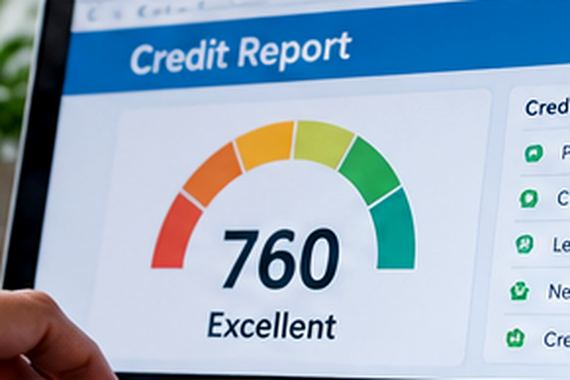
Credit reports influence many important financial decisions in the United States. Mortgage lenders, credit-card companies, auto lenders and other businesses may review them when deciding whether to extend credit and what terms to offer.
That means an incorrect late payment, unfamiliar account or inaccurate balance can create real financial consequences.
Fortunately, U.S. consumers have the right to review their credit reports and dispute inaccurate information.
Where to Get Your Credit Reports
The Federal Trade Commission identifies AnnualCreditReport.com as the authorized website for obtaining the free credit reports consumers are entitled to under federal law. The FTC warns that other websites may use similar names while trying to sell services or collect personal information.
Official resource: FTC Free Credit Reports Guide
The three nationwide credit reporting companies are Equifax, Experian and TransUnion.
Consumers can currently access their credit information more frequently than the traditional once-a-year model. The CFPB notes that consumers can request and review their reports weekly.
Credit Report vs. Credit Score
A credit report and a credit score are related but not identical.
The credit report contains information about credit accounts, payment history, balances, inquiries and certain public-record or collection information.
A credit score is a numerical estimate created from information in a credit report.
Different lenders may use different scoring models, which is why consumers can sometimes see different scores from different services.
Reviewing the underlying report is especially important because errors in that data can potentially affect scoring and lending decisions.
Common Credit Report Errors
The CFPB recommends checking for identity errors, accounts belonging to another person, unfamiliar accounts created through identity theft, closed accounts incorrectly reported as open, incorrect late payments, inaccurate balances and duplicate debts.
Official reference: CFPB Common Credit Report Errors
Consumers should review all three reports because information may not be identical across Equifax, Experian and TransUnion.
An account might appear on one report but not another.
How to Dispute an Error
If inaccurate information appears, the CFPB recommends disputing it with both the credit reporting company and the business that provided the information.
The dispute should clearly identify the problem and include supporting documentation when available.
Consumers submitting disputes by mail may want to keep copies of everything sent and use a method that provides proof of delivery.
Credit reporting companies generally must investigate disputes within 30 days, although certain circumstances can extend the investigation to 45 days.
Official instructions: CFPB How to Dispute a Credit Report Error
Accurate Negative Information Is Different
A common misconception is that any negative entry can be removed simply by disputing it.
That is not how the system works.
The CFPB explains that accurate negative information generally cannot be removed merely because the consumer does not like it. Most negative information remains on a report for a limited period, commonly around seven years depending on the type of information.
Companies claiming they can instantly erase accurate negative information may be selling questionable credit-repair services.
Consumers have the right to dispute inaccurate information themselves without paying a credit-repair company.
What Actually Helps Build Credit?
Consistently paying bills on time is one of the most important habits.
Consumers should also be cautious about carrying high balances relative to available revolving credit.
Opening many new accounts within a short period can also create unnecessary inquiries and make financial management more difficult.
A person building credit for the first time might consider a secured credit card or another product designed for consumers with limited credit history, provided the fees and terms are reasonable.
The goal should not be to borrow unnecessarily. Credit should be treated as a tool for building a reliable repayment history.
Check Before Major Financial Decisions
A good time to review credit reports is several months before applying for a mortgage, auto loan or other major credit product.
That gives consumers time to identify and dispute problems before a lender evaluates the application.
The CFPB recommends checking credit reports at least annually and paying particular attention before major borrowing decisions.
Watch for Identity Theft
An account you never opened may indicate more than a reporting mistake.
It can be a sign of identity theft.
Consumers who discover suspicious activity should consider placing a credit freeze and reporting identity theft through the federal government’s official recovery resources.
They should also immediately contact financial institutions associated with fraudulent transactions.
Final Thoughts
Credit reports are not documents that should be ignored until a loan application is denied.
Reviewing them regularly can help consumers identify fraud, correct inaccurate information and understand how lenders may view their credit history.
Use the authorized federal resource for obtaining reports, review all three major bureaus and dispute legitimate inaccuracies promptly.
The process is free, and consumers generally do not need to pay a third party simply to challenge incorrect information.